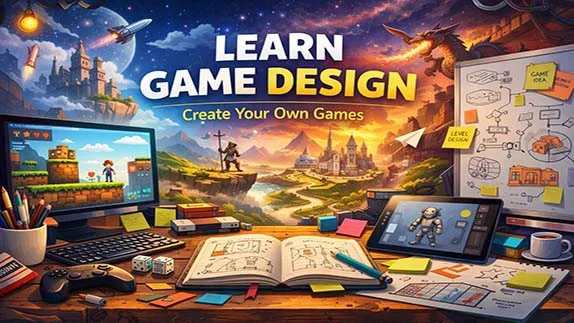
This Game Design Course is a beginner-friendly guide that teaches core game design principles, player experience, level design, and how games are built without requiring technical knowledge
Game Design Course: A Complete Beginner’s Guide to Learning How Games Are Made
- 👨🏫 Author: mohammad saleh salmanzadeh
- 🌐 Language: Persian / English
- 📝 Creation Date:
- 📅 Last Updated Date:
- 📂 Category: Game Design
- 🔗 Sharing:

Game Design Course: A Complete Beginner’s Guide to Learning How Games Are Made
Video games are no longer just entertainment. They are complex systems that combine creativity, psychology, technology, and storytelling. Behind every successful game is game design—the discipline that shapes how a game works, feels, and keeps players engaged.
If you have ever wondered “How do games actually get designed?” or “Can I learn game design without a technical background?” then a game design course is the right place to start.
This article explains what a game design course is, what you will learn, who it is for, and how it can help you enter the game industry—even if you are a complete beginner.
What Is Game Design?
Game design is the process of creating rules, systems, mechanics, and experiences that define how a game is played. A game designer decides:
What the player can do
What the player cannot do
What challenges exist
How progress works
How the game teaches itself to the player
Game design is not programming, and it is not graphic design, although it works closely with both.
A simple way to understand game design is this:
Game design answers the question: “What is the player doing, and why is it fun?”
What Is a Game Design Course?
A game design course is a structured learning program that teaches the principles, tools, and thinking methods behind designing games.
These courses are usually designed for:
Beginners with no prior experience
Creative individuals interested in games
People exploring careers in the game industry
Developers who want to understand design better
A good course focuses on thinking like a designer, not just copying existing games.
Who Should Take a Game Design Course?
Beginners With No Technical Background
You do not need to know coding, math, or advanced software to start. Most beginner courses focus on ideas, logic, and player experience.
Creative Thinkers
If you enjoy storytelling, problem-solving, psychology, or creating systems, game design is a natural fit.
Aspiring Game Developers
Game designers are essential members of development teams. Learning design early helps you collaborate better later.
Indie Game Creators
If you want to make your own games, design skills are critical—even more important than graphics or technology.
What You Learn in a Game Design Course
Core Game Design Concepts
Game Mechanics
Mechanics are the basic actions players perform, such as:
Jumping
Shooting
Collecting items
Making choices
A course teaches how mechanics create engagement and challenge.
Game Rules and Systems
Rules define what is allowed. Systems explain how mechanics interact. For example:
Health systems
Economy systems
Skill progression
Good design balances freedom and limitation.
Player Experience (UX for Games)
A major focus of any game design course is player experience.
You learn how to:
Guide players without confusing them
Design fair difficulty curves
Avoid frustration
Create motivation and reward loops
Game design is deeply connected to human psychology.
Level Design Basics
What Is Level Design?
Level design focuses on the structure of spaces where gameplay happens.
You learn:
How levels teach mechanics naturally
How layout affects player behavior
How pacing works
Even non-3D games rely heavily on level design principles.
Storytelling and Narrative Design
Not all games need stories, but many benefit from them.
A game design course introduces:
Environmental storytelling
Player-driven narratives
Choice and consequence
World-building basics
Story in games is about interaction, not just writing.
Prototyping and Iteration
Why Prototyping Matters
Great games are not designed once. They are tested, broken, and rebuilt.
Courses teach:
Paper prototyping
Simple digital prototypes
Playtesting methods
Iterative improvement
You learn to fail fast and improve smarter.
Tools Used in Game Design Courses
Beginner courses usually introduce tools with low learning barriers.
Common Tools Include:
Paper and pen (yes, seriously)
Simple engines like Unity or Godot (design-focused use)
Visual scripting tools
Spreadsheets for balancing systems
The focus is always design thinking, not technical mastery.
Online vs Offline Game Design Courses
Online Game Design Courses
Pros:
Flexible schedule
Affordable
Global access
Self-paced learning
Cons:
Requires self-discipline
Less direct feedback (unless live)
Offline or University Courses
Pros:
Structured environment
Direct mentorship
Team-based projects
Cons:
Expensive
Time-restricted
Location-dependent
For beginners, online game design courses are often the best starting point.
What Makes a Good Game Design Course?
A strong course should include:
Clear Fundamentals
Avoid courses that jump straight into tools without explaining why things work.
Practical Assignments
You should design games, not just watch videos.
Feedback and Playtesting
Design improves through critique and testing.
Portfolio-Focused Output
At the end, you should have projects to show, not just certificates.
Career Opportunities After a Game Design Course
A beginner course will not make you a senior designer—but it opens doors.
Possible paths include:
Junior Game Designer
Level Designer
Narrative Designer
Indie Game Creator
Game QA with design focus
Many professionals start with one strong design portfolio, not a degree.
Common Myths About Game Design Courses
“I Need to Be Good at Programming”
False. Designers think, programmers build.
“I Must Be Artistic”
Not required. Design is about systems and experience.
“Only Gamers Can Be Designers”
Wrong. Many great designers study behavior, not just games.
How Long Does It Take to Learn Game Design?
Learning basics:
1–3 months for fundamentals
Building confidence:
6–12 months with practice
Becoming professional:
Depends on consistency, feedback, and portfolio quality
Game design is a skill, not a shortcut.
gn for beginners
Conclusion: Is a Game Design Course Worth It?
A game design course is worth it if you want to understand how games work beneath the surface.
It teaches you:
How players think
How systems interact
How fun is created intentionally
How to turn ideas into playable experiences
You do not need talent. You need curiosity, practice, and feedback.
If you are serious about games—not just playing them, but creating them—a well-structured game design course is one of the smartest places to begin.
🇬🇧 Want to master game level design fast? Enroll in the “Complete Indie Game Development Process” course now and get started!
📚 Related content:
- The Complete Learning Path to Becoming a Game Developer (From Zero to Real Skills)
- Level Design Course: A Complete Beginner’s Guide to Designing Game Worlds
- Game Content Creation: A Beginner’s Guide to Making Engaging Game Experiences
Q1: What is Game Design?
Answer: Game design is the process of designing the rules, systems, mechanics, and overall experience of a game. A game designer decides what the player can do, how challenges are structured, and how the game teaches itself to the player. Game design answers the question: "What does the player do, and why is it enjoyable?"
Q2: Do I need to know programming to learn game design?
Answer: No. You don't need programming knowledge or professional artistic skills to start learning game design. Most introductory courses focus on ideas, logic, systems, and player experience. Programming and graphics are separate skills that collaborate with game design, but they are not prerequisites.
Q3: What is the difference between game design and game programming?
Answer: Game design focuses on "what" makes a game fun and engaging and "why" the player enjoys it. Game programming, on the other hand, is about "how" to turn that design into code and make the game playable. The designer thinks, the programmer executes — these two roles complement each other.
Q4: What does a game design course include?
Answer: A standard game design course covers topics like game mechanics, rules and systems, player experience, level design principles, storytelling and narrative, prototyping and iteration, and basic tools such as pen and paper or simple engines. The main focus is on design thinking, not technical mastery.
Q5: How long does it take to learn game design?
Answer: Learning the basics of game design usually takes 1 to 3 months. Gaining enough confidence to design independently requires about 6 to 12 months of consistent practice. Becoming professional depends on the amount of practice, quality of feedback, and your portfolio. Game design is a gradual skill, not a shortcut.
Q6: What is the best way for beginners to learn game design?
Answer: The best approach includes taking a structured introductory course, practicing with small projects (paper design, rapid prototyping), getting feedback from others, studying successful game analyses, and continuously refining your designs. Instead of scattered learning, it's better to follow a complete course from start to finish and build portfolio-ready projects.
- 🗨️ No comments have been posted for this article yet. Be the first!