
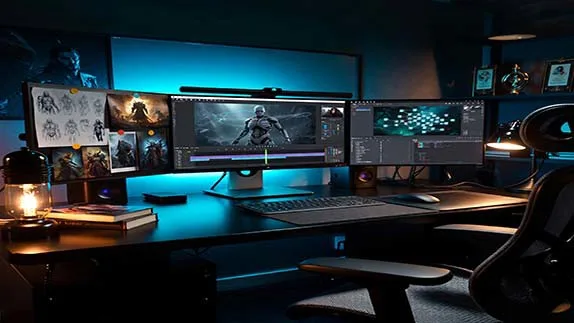
Animation course for beginners: a simple guide to 2D, 3D, and stop-motion animation, tools, skills, and step-by-step learning path.
Animation Course for Beginners: A Simple Step-by-Step Guide
- 👨🏫 Author: mohammad saleh salmanzadeh
- 🌐 Language: Persian / English
- 📝 Creation Date:
- 📅 Last Updated Date:
- 📂 Category: Game Content Creation
- 🔗 Sharing:

Animation Course for Beginners: A Simple Guide
Animation is the art of making drawings, images, or objects move. From cartoons and movies to video games and apps, animation is everywhere. Learning animation can be a fun and rewarding journey, especially for beginners. This article is written for people who have no prior experience in animation. As a teacher, I will explain what animation is, why it is important, the main types of animation, and how to start learning step by step.
What Is Animation?
Animation is a process that creates the illusion of movement by showing a series of images in a sequence. When these images are shown quickly one after another, the human eye sees motion. This is the basic principle behind all animation.
How Animation Works
Imagine a flipbook. When you flip the pages fast, the drawings appear to move. Animation works in the same way, but with digital tools and software. Each frame (image) is slightly different from the previous one, and when played quickly, it creates motion.
Why Learning Animation Is Valuable
Animation is not only for artists. It is a useful skill in many fields, including entertainment, education, marketing, and technology.
Animation in Entertainment
Movies, TV shows, and video games use animation to bring characters and stories to life. Many popular films and series rely heavily on animation.
Animation in Education
Animated videos can explain complex ideas in a simple and engaging way. Teachers and educational companies often use animation to make learning more fun.
Animation in Marketing
Businesses use animated videos for advertisements, product demos, and social media content. Animation can attract attention and help explain products quickly.
Main Types of Animation
There are several types of animation, and each one has its own tools and techniques.
2D Animation
2D animation is flat and uses width and height. It is commonly used in cartoons, mobile apps, and web animations.
Examples of 2D Animation
Traditional hand-drawn animation
Vector animation
Motion graphics
Frame-by-frame animation
2D animation is often a good starting point for beginners because it is easier to learn and requires fewer technical skills.
3D Animation
3D animation uses width, height, and depth. It is used in modern films, games, and 3D apps.
Examples of 3D Animation
Character animation
Environment animation
Object animation
Visual effects (VFX)
3D animation is more technical and requires knowledge of modeling, rigging, and lighting.
Stop Motion Animation
Stop motion animation uses real objects. The animator moves the object slightly and takes a photo for each movement. When the photos are played in sequence, the object appears to move.
Examples of Stop Motion
Clay animation
Puppet animation
Paper cutout animation
Stop motion is creative and hands-on, but it requires patience and time.
Skills You Will Learn in an Animation Course
An animation course teaches many important skills that help you create professional animations.
Drawing and Design Basics
Even if you don’t plan to draw professionally, learning basic drawing helps you understand shapes, proportions, and movement.
Timing and Spacing
Timing is how long a movement takes. Spacing is how the movement changes between frames. These two concepts are essential for making animation look natural.
Principles of Animation
There are 12 basic principles of animation that help make movement realistic and appealing. Some of these principles are:
Squash and Stretch
Anticipation
Follow Through
Slow In and Slow Out
Exaggeration
These principles are used in both 2D and 3D animation.
Storytelling and Character Acting
Animation is not only movement; it is storytelling. You learn how to express emotions, personality, and actions through characters.
Example: Simple Walk Cycle Steps
A basic walk cycle typically consists of 8 key frames:
| Frame | Leg Position | Description |
|---|---|---|
| 1 | Both feet on ground | Contact position |
| 2 | Left leg up, right leg down | Down position |
| 3 | Left leg forward, right leg back | Passing position |
| 4 | Left leg down, right leg up | Up position |
| 5 | Both feet on ground (opposite of frame 1) | Reverse contact |
| 6 | Right leg up, left leg down | Reverse down |
| 7 | Right leg forward, left leg back | Reverse passing |
| 8 | Right leg down, left leg up | Reverse up |
After frame 8, the cycle repeats back to frame 1.
Tools and Software Used in Animation
Different animation types use different software. Here are some common tools for beginners.
Tools for 2D Animation
Adobe Animate
Toon Boom Harmony
Krita
OpenToonz
Tools for 3D Animation
Blender
Autodesk Maya
Cinema 4D
3ds Max
Tools for Motion Graphics
Adobe After Effects
Apple Motion
What to Expect in a Beginner Animation Course
A beginner animation course usually starts with basic concepts and gradually moves to more complex projects.
Basic Lessons
Introduction to animation
Drawing basics
Understanding frames and keyframes
Simple movement exercises
Intermediate Lessons
Character design
Animation principles
Lip-sync and facial expressions
Camera movement
Final Projects
Most courses end with a final project, such as:
A short animated scene
A character walk cycle
A motion graphics video
A simple 3D animation
These projects help you build a portfolio and show your progress.
Common Challenges for Beginners
Learning animation can be challenging, especially at first. Here are some common issues beginners face.
Feeling Overwhelmed
Animation has many new terms and techniques. It is normal to feel overwhelmed in the beginning. The key is to practice consistently and not rush.
Time and Patience
Animation takes time. Even short animations can require many frames. Patience and persistence are essential.
Criticism and Improvement
Receiving feedback is a big part of learning animation. Don’t be discouraged by criticism; use it to improve your skills.
How to Start Learning Animation
Starting animation does not require expensive equipment or advanced skills.
Choose Your Path
Decide whether you want to focus on 2D, 3D, or motion graphics. Each path has its own tools and learning process.
Practice Daily
Even 20 minutes of practice every day can make a big difference. Consistency is more important than long practice sessions.
Join Online Communities
There are many animation communities online where you can ask questions, share your work, and receive feedback.
Career Opportunities in Animation
Animation can become a professional career with many job opportunities.
Possible Jobs
2D Animator
3D Animator
Motion Graphics Artist
Character Animator
VFX Artist
Animation skills are also valuable in industries like film, gaming, advertising, and education.
Conclusion
Animation is a creative and powerful skill that can bring stories and ideas to life. You don’t need a professional background to start learning animation. With patience, practice, and the right guidance, anyone can learn how to animate.
Whether you want to create cartoons, game characters, or motion graphics, an animation course can be the first step toward a creative and rewarding journey. The best time to start learning animation is now.
🇬🇧 Want to learn 3D modeling and animation from scratch and gain real skills? Enroll in the “Basic Training of 3ds Max 2026” course now and create your first animation!
Q1: What is animation and how does it work?
Answer: Animation is the process of creating the illusion of motion by displaying a series of images or frames in rapid succession. When these images are shown at high speed, the human eye perceives movement. This is the same principle as a flipbook, where flipping pages quickly makes the drawings appear to move. Animation can be created manually, digitally, or with real objects (stop motion).
Q2: What is the best way for beginners to learn animation?
Answer: The best path includes choosing an animation type (2D, 3D, or motion graphics), learning basic design and movement principles, understanding the 12 principles of animation, practicing with small projects like walk cycles or bouncing balls, and then using appropriate software. For beginners, starting with 2D animation and free tools like Krita or Blender is recommended.
Q3: What is the difference between 2D and 3D animation?
Answer: 2D animation is flat with only width and height. It's used in cartoons, motion graphics, and web animations. 3D animation has width, height, and depth, and is used in modern films, video games, and visual effects. 3D animation typically requires knowledge of modeling, rigging, and lighting, making it more complex than 2D animation.
Q4: What software is suitable for starting animation?
Answer: For 2D animation, software like Krita (free), OpenToonz (free), and Adobe Animate (commercial) are suitable. For 3D animation, Blender (free and powerful) is the best choice for beginners. More professional software like Autodesk Maya and 3ds Max are also used in the industry. For motion graphics, Adobe After Effects is a popular choice.
Q5: How long does it take to learn animation?
Answer: With regular practice, learning basic concepts and animation principles typically takes 2 to 3 months. Building simple projects like walk cycles or object animations takes about 3 to 6 months. Achieving relative proficiency for entering the job market and creating professional animations usually requires 1 to 2 years of consistent practice. Progress depends on practice time, quality of learning resources, and hands-on projects.
Q6: Are there career opportunities in animation?
Answer: Yes, animation offers diverse career opportunities across various industries. Related careers include 2D animator, 3D animator, motion graphics designer, character animator, visual effects (VFX) artist, environment designer, and video game animator. This skill is widely used in film, game development, advertising, education, and digital marketing, and the demand for skilled animators is increasing.
- 🗨️ No comments have been posted for this article yet. Be the first!